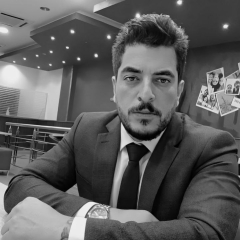
Between Professionalism and Human Conviction… Mohamed Gamal on His Most Challenging Role in Sohab Al-Ard
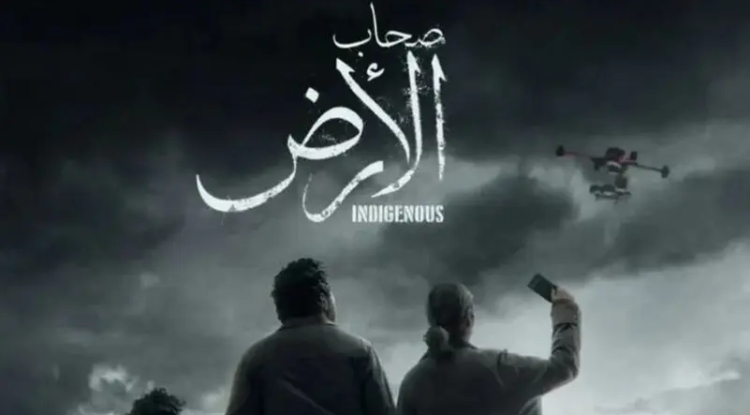
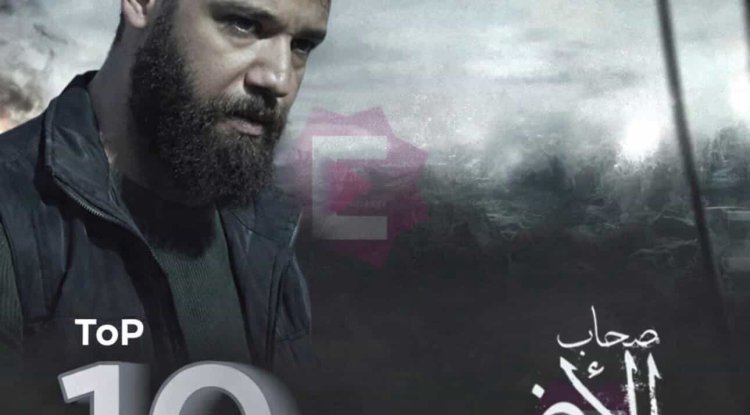
Mohamed Gamal discusses portraying a settler in Sohab Al-Ard
At a time when the air itself feels heavy with ashes, he chose to walk through fire.
Caught between his personal sympathy for the Palestinian cause and his professional commitment as an actor capable of separating belief from performance, Mohamed Gamal found himself facing one of the most sensitive roles in recent Arab drama: portraying a Zionist settler in the series Sohab Al-Ard (“Companions of the Land”).
The character represents one side of an ongoing and bloody conflict, emerging in the aftermath of October 7 and amid a reality that remains deeply inflamed. The backlash was swift. Criticism followed — particularly from Hebrew-language media. Yet Gamal insists that what he delivered was not “mere acting,” but rather “a historical stance” he will one day recount to his children.
In this exclusive interview, Gamal speaks candidly about the psychological challenge, the linguistic preparation, the difficulty of embodying “the other side,” and his message to Hebrew media outlets that accused the series of distorting realit
First, how did you deal psychologically and artistically with portraying a character representing one side of such a sensitive political conflict — one that part of the audience may reject?
“First of all, thank you for having me,” he begins.
“From day one, I saw this as an artistic message — but not an ordinary one. It’s a historical moment being documented. This isn’t a passing social role; it’s tied to a prolonged conflict that will stay with us for a lifetime.”
“When I was offered the role, I was already closely following what our Palestinian brothers were going through. I understood we were working in a post–October 7 context, after the loss of many resistance fighters in Hamas. I knew we were touching a very sensitive nerve.”
“Psychologically, it was difficult. You place yourself in the position of the other side — a side I personally oppose in terms of the cause. But professionally, you must separate. You must be truthful in your performance, even if the role itself is provocative.”
Did you see the role as simply an acting job, or as an artistic message carrying a specific stance or interpretation of reality?
“Not at all just a performance,” he says firmly.
“I see it as a historical position. Something I’ll be proud to tell my children about one day. When they grow up and ask, ‘What did you do during that period?’ I’ll say I participated in a work that documented an important chapter of the conflict.”
“Art isn’t just entertainment. It’s documentation. It’s interpretation. It’s human alignment. We’re not telling a fictional story — we’re portraying a reality we’ve all witnessed.”
Did you face direct pressure or criticism after the episode aired?
“The backlash was expected — especially from Hebrew media. They didn’t like the image being presented. But I anticipated that even before the episode aired.”
“On the contrary, the more the character provokes people, the more I’ve succeeded as an actor. Because in reality, that character is provocative. It’s part of his makeup. A side that imposes dominance and intimidation — naturally, it will be disturbing.”
Was mastering Hebrew merely a linguistic exercise, or did you try to understand the mentality and culture behind the character before speaking it on camera?
“Of course it wasn’t just about language. I’m not a call-center agent repeating memorized lines — I’m an actor.”
“I immersed myself visually. I watched countless videos and statements. I studied real situations. Some of what I saw was painful — scenes of dancing in the courtyards of Al-Aqsa Mosque, or humiliating fathers in front of their children.”
“These moments were harsh, but they helped build the psychological state of the character. I had to understand how he thinks, how he speaks, how he sees himself.”
While delivering your Hebrew dialogue, were you attentive to tone and expression to ensure authenticity?
“Absolutely. This is 2025 — not the era of outdated stereotypes. In the past, Jewish characters in Egyptian cinema were often portrayed in somewhat caricatured ways, like certain models in Raafat El-Haggan.”
“Today, the image is different. If you observe contemporary Israeli figures — like Israeli army spokesperson Avichay Adraee — you’ll notice they speak in a very normal tone, but with a particular undertone… a provocative edge.”
“So I focused intensely on tone, on excessive confidence, on a sense of authority. The character must feel in control — even while claiming victimhood.”
Was it difficult to separate your real personality from a character speaking another language and embodying a different stance in the conflict?
“I’m a professional actor. Naturally, I separate my real self — someone sympathetic to Palestine — from the settler who believes the land belongs to him.”
“But I won’t lie — that separation required psychological effort. You’re entering a mindset shaped by hostility, convinced of entitlement, seeing the other side as merely an obstacle.”
“I constantly reminded myself: this is a role. This is acting. Otherwise, it would take a psychological toll.”
Some critics argued that the series granted the Israeli character a degree of humanity. How do you respond?
“We didn’t beautify anyone. We presented a realistic model. A person may appear ordinary in speech and demeanor, but their actions can be provocative and harsh.”
“The danger isn’t in appearance — it’s in behavior. The series was careful to reflect that clearly.”
Your message to Hebrew media that attacked the series and accused it of distorting the truth?
“My message is simple,” he says.
“As the late Egyptian singer Shaaban Abdel Rahim once sang in his famous song, ‘I Hate Israel’:
‘I hate Israel, and I say it if I’m asked.’”
“Hebrew media doesn’t concern us. They’re known for distorting facts — history proves that.”
“We didn’t invent anything. The difference between us and them is the real videos available online. The series relied on scenes the whole world has seen. If anyone is falsifying reality, the footage speaks for itself.”
Finally, what do you say to viewers who blurred the line between you and the character?
“I’d tell them: separate Mohamed Gamal the actor from Mohamed Gamal the person.”
“I’m originally a comedic actor, a man of the theater, relying on charisma and lightness. Playing a villain was an experiment — a challenge. And if I succeeded, it’s because art demands sincerity.”
“But I love comedy. I love tragedy. I love every form of performance. An actor must be able to wear every face — and remove it the moment the camera stops.”
Between professionalism and human conviction, Mohamed Gamal walked a thin line.
He deliberately portrayed a provocative character, trusting the audience’s awareness to distinguish between role and performer.
In a time when politics and art intertwine, Sohab Al-Ard was not merely a television series — but another arena in the battle of narrative.
Interview by Aliaa Al-Hawari
What's Your Reaction?